
In Singapore, a staggering 1 in 3 seniors over the age of 60 faces a silent yet impactful condition known as sarcopenia. This progressive loss of muscle mass and strength not only hinders daily activities but also poses a significant challenge to maintaining independence in the golden years. Understanding sarcopenia, its implications, and strategies for management is crucial for both the elderly and their caregivers.
Understanding Sarcopenia
Sarcopenia (loss of muscle mass) is a common condition that affects the elderly. It is an age related condition in which there is an involuntary loss of skeletal muscle mass and skeletal muscle strength. This loss of muscle mass and muscle strength starts as early as in your forties and increases linearly as you age. Your skeletal muscle mass and strength can reduce as much as up to 50 percent as you reach your eight decade of life.
But what if you lose muscle mass? and how does that impact your lifestyle? Here’s a quick answer…
Losing skeletal muscle mass can lead to frailty. Although frailty is not specific to older adults, its risk increases with age. Frailty can give rise to fatigue with routine daily activities, slower walking speed, poor endurance, lower levels of activity and unplanned weight loss. Risk of falls increases as the person’s balance reaction time decreases. Falls may cause hip/ elbow/ wrist injuries or fractures which can lead to hospitalisation, loss of function and temporary or permanent disability.
So, how can it be prevent? Lets find out…
The Role of Exercise in Combating Sarcopenia
Skeletal muscle loss can be slowed down with the correct type and appropriate intensity of exercises. To reduce muscle loss and improve bone mass density, strength training exercises twice a week are highly recommended by health care professionals. For instance, to address specific needs focusing on the upper body and areas around the elbow a tailored exercise program with the help of an orthopedic arm specialist can be adhered to. These exercises can be done with either using your body weight as resistance or using external weights like dumbbells, resistance bands or other exercise equipment. Strength training exercise must be built up gradually with graded weights or increasing repetitions. Further recommendations by a Physiotherapist or Exercise physiologist would help in establishing a proper regime for the correct exercise.
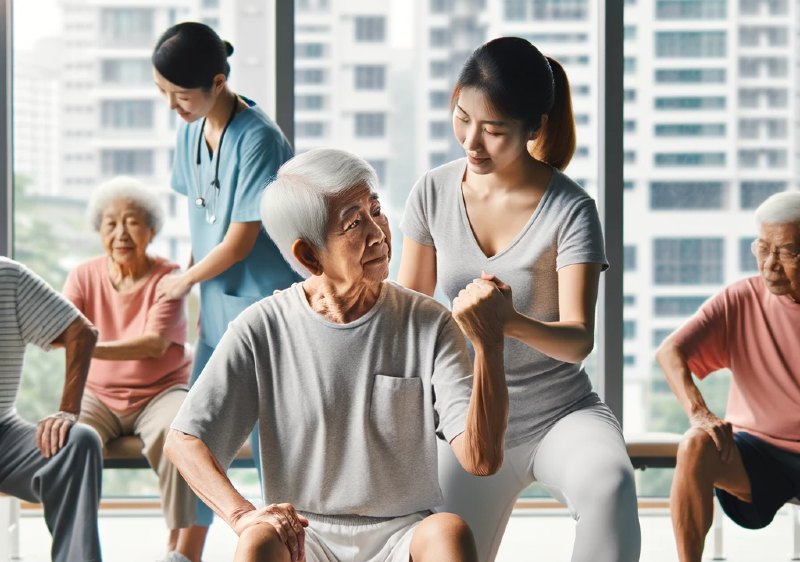
World Health Organisation (WHO) recommends at least 150 minutes of moderate intensity of exercises a week for an older person. Moderate intensity exercises are when the person’s heart rate is between 65% to 74% of your maximum heart rate. Examples of moderate intensity exercises are brisk walking, cycling, swimming. These should be combined with balance and strengthening exercises at least twice a week to optimise bone and muscle health, reduce risk of falls, improve sleep patterns and maintain overall well-being of the older person.
Other Ways to Counter Sarcopenia
Nutritional Strategies
Adequate nutrition plays a critical role in preventing and managing sarcopenia. Protein-rich diets, along with the right balance of vitamins and minerals, support muscle health and can counteract the effects of sarcopenia. Consultation with a dietician or a healthcare professional can provide personalized dietary advice to meet individual nutritional needs.
Technology and Innovations in Care
Advancements in medical technology have introduced innovative solutions for monitoring and managing sarcopenia. Wearable devices and smart technology can help track physical activity levels, while telemedicine platforms offer a convenient way for seniors to consult with healthcare providers and specialists.
The Importance of Early Detection
Early detection and intervention are crucial in managing sarcopenia effectively. Regular health check-ups, including muscle mass assessments, can help in identifying sarcopenia at its nascent stages. So, a shoulder elbow clinic, with its specialized focus, can offer targeted treatments and rehabilitation strategies to mitigate the impacts of sarcopenia on say the elbow and surrounding areas.
Conclusion
Sarcopenia may pose a significant challenge to the elderly in Singapore, but with the right strategies, its impact on daily living can be minimized. Incorporating regular exercise, ensuring a nutritious diet, seeking timely medical advice, and leveraging technology can empower seniors to lead a more active and fulfilling life despite the challenges posed by sarcopenia. By fostering a supportive community and accessing specialized care, such as that provided by doctors, allied health professionals, and caregivers, seniors can navigate the complexities of sarcopenia with confidence.


